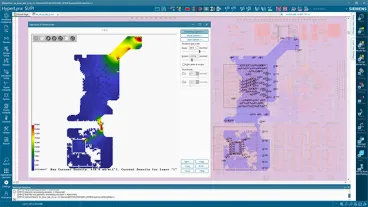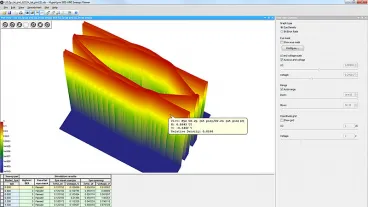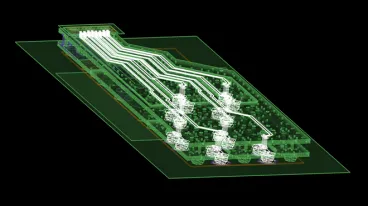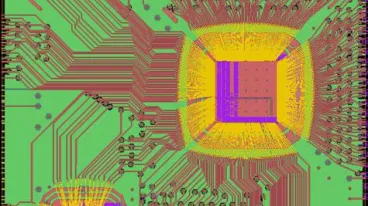
HyperLynx capabilities
HyperLynx is specifically designed to put the right tool into the right hands. It speeds your analysis journey by allowing you to control the tradeoff between analysis speed and accuracy, thereby providing the most accurate simulations at the most appropriate times. HyperLynx capabilities include:
-
Design simulation
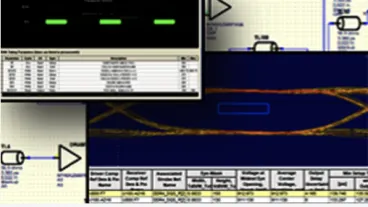
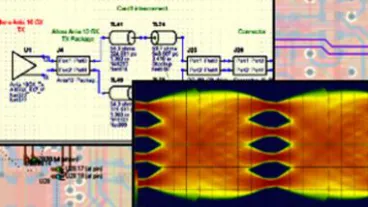
Modeling and simulation are used to make design decisions by exploring circuit and layout topologies and their behavior. Simulation provides a "virtual breadboard" where we can connect what we want and how we want, to see how it works. We change the design interactively and resimulate to see the effect of design tradeoffs. HyperLynx simulation reports key design performance metrics that can be compared to required values to determine if the design passes or fails, and by how much.
Design simulation is performed before PCB layout to define the physical design rules used to place and route the board. When our tools are used for PCB layout, design constraints defined in HyperLynx are carried forward into the PCB layout automatically. Once pre-layout design simulations are complete, expected values for design operating margins are established.
-
Performance optimization
When the design is complex and margins are tight, there may be too many possible design tradeoffs to explore with interactive modeling and simulation. HyperLynx has multiple automated optimizers that will improve design performance based on specific performance metrics. Different methods are used depending on the application and size of the design space to be explored. For uncomplicated cases, swept-parameter analysis is simple to set up and provides results that are easy to interpret. In intermediate cases, expert-based algorithms are used to select design alternative for exploration based on application-specific knowledge. In the largest, most complex cases, response surface techniques are used, with advanced algorithms that automatically manage the tradeoff between properly sampling a large design space and zeroing in on areas of optimum performance. The output from each optimization process is an improved set of design parameters and rules that can be driven into PCB layout.
-
Analysis verification
Verification analysis and simulation are used to ensure that the finished design is ready for the next step of the design process. HyperLynx performs verification at both the schematic and PCB layout level:
- Schematic verification ensures the captured circuitry is functionally and electrically correct. There's no point in investing time and effort into modeling and simulation if the components are miswired, signals aren't properly terminated, or devices use incompatible voltage levels. Schematic verification allows these (and many other) issues to be identified and corrected up front in the design cycle.
- Post-layout PCB verification examines the board as it was actually laid out to ensure that design rules were followed properly, and that there are no unintended consequences associated with the final layout. Design rules are imperfect and are often impossible to follow exactly. HyperLynx uses a unique "progressive verification" methodology to perform analysis in stages, each more detailed and accurate than the last. This unique flow resolves as many potential design issues as possible, as quickly as possible, while requiring as little user analysis-specific expertise as possible.
Verification analysis doesn't have to wait until the schematic or board layout is complete - in fact, the earlier analysis is performed in the design process, the better. Sections of the design can be verified and implemented, so that issues can be identified and resolved. Finding problems early means that other sections of the design aren't affected, as is